Adaptive surfing sets a participation record at the 2026 Pantín Classic
Galicia's Pantín beach opened its 39th edition with an adaptive surfing contest that broke its entry record and crowned champions in eleven divisions.
Surf Guide · · 2 min read
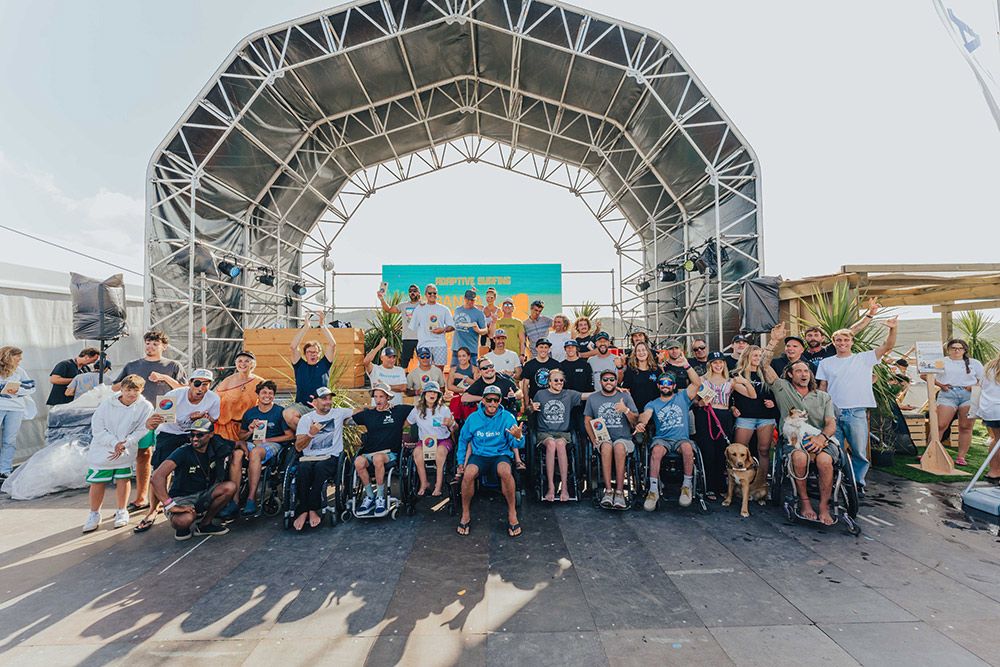
Adaptive surfing kicked off the 39th edition of the Abanca Pantín Classic Galicia Pro at Pantín beach in Valdoviño, A Coruña, and it did so with numbers the event had never seen before. Over the weekend of 22 and 23 August 2026, around forty surfers with disabilities from Spain, Portugal, France, Italy, Switzerland, Germany, Belgium and Lithuania competed across eleven divisions, beating the previous participation record for these contests.
The Atlantic was gentle rather than spectacular. Sets hovered around half a metre on both days, with a light offshore breeze on Saturday that made some manoeuvres tricky and almost no wind on Sunday. In waves that small, reading the peak and picking the right ride mattered as much as raw power.
The standout performance came from Marbella's Sarah Almagro, the reigning Spanish, European and world champion in Prone 2. She posted 14.50 points to finish well clear of Lithuania's Upé Mikalauskaite and Germany's Esther Bode. Almagro, who lost her hands and feet to meningococcal meningitis at 18, is one of the best-known names in international adaptive surfing.
Elsewhere, Miguel Silva won Prone Open and Pedro Palma took the men's Prone 2. Ibai Hervás and Chloé Habasque claimed the men's and women's Kneel/Upright titles, Xabier Ayestaran won Stand 2 Open, Camilo Abdula Stand 1 Open and Mireia Cabeñes the women's Stand 3. In the visually impaired divisions, Pedro Rodríguez won Visual 2, while Ben Neumann and Marta Jordao completed a Visual 1 double in the men's and women's events. A Coruña's Dani Souto, one of the local drivers behind the discipline, also competed in Visual 2.
The boom in adaptive entries comes in a significant year for the Galician event, which has regained QS 6000 status on the WSL qualifying circuit and is hosting surfers from more than twenty countries. After the prize-giving, attended by Valdoviño mayor Alberto González, the QS trials began on Monday 24 August, with wildcards into the main draw on offer for the winners.
For Spanish adaptive surfing, the takeaway is simple: more athletes, more nations and a high-profile stage inside one of Europe's longest-running contests. If the trend continues, next year's edition may need to make room for even more competitors.
Written by Surf Guide, with information from Surfer Rule, Concello de Valdoviño, Euro Weekly News.